
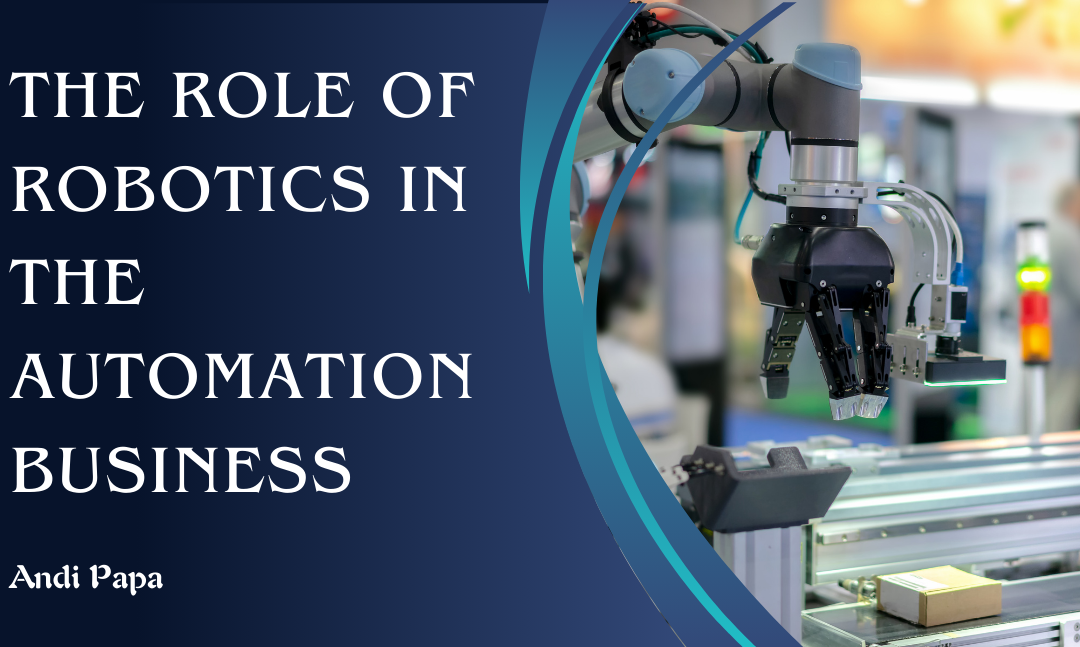
The automation industry has witnessed remarkable advancements over the past few decades, with robotics playing a pivotal role in this transformation. Robotics technology is revolutionizing manufacturing, logistics, healthcare, and many other sectors, enabling businesses to enhance productivity, improve efficiency, and reduce operational costs. As robots become increasingly sophisticated, their applications within the automation business continue to expand, making them indispensable tools for modern enterprises.
One of the most significant contributions of robotics to the automation business is the ability to perform repetitive tasks with precision and speed. In manufacturing environments, robots are widely used for assembly, welding, painting, and packaging. Unlike human workers, robots can operate continuously without fatigue, leading to increased output and consistency. This capability not only enhances productivity but also improves product quality, as robots can execute tasks with a level of accuracy that surpasses human capabilities.
In addition to traditional manufacturing, robotics is making significant strides in the logistics sector. Automated guided vehicles (AGVs) and drones are increasingly utilized to streamline warehouse operations. These robotic systems can transport materials, pick and pack orders, and manage inventory with minimal human intervention. By automating these processes, companies can reduce labor costs, minimize errors, and optimize warehouse space. The efficiency gained through robotics in logistics enables businesses to respond more quickly to customer demands and maintain a competitive edge.
The integration of robotics in healthcare is another area of growth for the automation business. Surgical robots, for instance, assist surgeons in performing complex procedures with enhanced precision and control. These systems can reduce recovery times and minimize complications, improving patient outcomes. Additionally, robots are increasingly used in tasks such as medication dispensing and patient monitoring, allowing healthcare professionals to focus on higher-level care and patient interactions.
Robotics also plays a crucial role in enhancing workplace safety. In industries where hazardous tasks are prevalent, robots can take over dangerous jobs, reducing the risk of injuries to human workers. For example, in construction or mining, robotic systems can perform tasks such as drilling, demolition, and material handling in environments that may be unsafe for humans. By automating these processes, businesses can create safer working conditions and protect their workforce.
Furthermore, the development of collaborative robots, or cobots, is transforming the way humans and machines interact in the workplace. Unlike traditional industrial robots that operate independently, cobots are designed to work alongside human workers, assisting them in various tasks. This collaboration enhances productivity and allows for greater flexibility in production processes. Cobots can be easily programmed and reconfigured to adapt to changing tasks, making them valuable assets in dynamic manufacturing environments.
The impact of robotics on the automation business extends to data collection and analysis as well. Many robotic systems are equipped with sensors that collect real-time data on production processes, equipment performance, and quality control. This data can be analyzed to identify inefficiencies, optimize operations, and drive continuous improvement. By leveraging the insights gained from robotic systems, businesses can make data-driven decisions that enhance overall performance.
As robotics technology continues to evolve, we can expect even greater advancements in the automation industry. Artificial intelligence and machine learning are increasingly being integrated into robotic systems, allowing them to learn from experiences and adapt to new situations. This capability opens the door to even more complex applications, such as autonomous decision-making and advanced problem-solving.
In conclusion, robotics plays a vital role in the automation business by enhancing productivity, improving efficiency, and ensuring workplace safety. From manufacturing and logistics to healthcare and beyond, robots are transforming how industries operate and interact with technology. As robotics continues to advance, its influence on the automation sector will only grow, paving the way for new innovations and opportunities that will shape the future of work.